Choreographer Piet Van Dycke does not fit into pigeonholes. With his innovative mix of dance, circus and acrobatics, Belgium and the Netherlands have gained a new audience favourite. "Tricks don't interest me, but the way to get there."


A few seconds
Easter holiday is not in the dictionary of Piet Van Dycke (27). This week he rehearses in Destelheide in Dworp with his 'glorious bodies' (also the title of his new performance), a group of circus artists between 53 and 67 years old who still do handstands as if they were young chickens. It is also busy because of the many circus festivals that will soon herald spring. With the humorous balance duet On point, Van Dycke heads to Hopla! in Brussels, and during the MAD festival in Antwerp, Exit plays at Park Spoor Noord as the backdrop.
Especially with that last performance, Van Dycke, who was previously called 'the best acrobatic dancer of his generation' in this newspaper, proved that he is here to stay. At first glance, the installation of Exit – a gray two-storey apartment building – seems rather colorless. Until the doors start to float and one of the walls turns into a life-size balance board from which the four circus artists – specialized in dance acrobatics, bascule and aerial straps – let themselves slide down like monkeys. “When we play school performances, that is invariably the moment when all young people pull out their smartphones,” laughs Van Dycke. “Afterwards they copy the choreography on the playground and send us videos.”
In Exit, the acrobats have to keep each other in balance all the time, which is almost a matter of life or death (or at least injury or no injury). If someone balances their weight a bit too overconfident, the rotating wall will shoot through and the whole group will fall to the ground. ‘I have now seen the piece about eighty times, but the tension is still there,’ says Van Dycke. "So much can go wrong, sometimes it depends on a few seconds. Or a dancer gets so much energy from the audience that he shifts up a gear, but then the rest is endangered.' It is precisely because of this togetherness that circus is the ultimate medium for Van Dycke. "It's about connection, you depend on each other. In solo disciplines, such as Chinese mast or trapeze, the relationship to the object is central. But I prefer to play with the relationship between people. Before each performance I do an extensive preliminary investigation. For me, the work only makes sense if there is a personal connection and the group also enjoy their time together outside rehearsals. The performers call me the bossman, but also daddy Piet, because I want everyone to feel good about themselves.' (laughs)
Tightrope walking
Just like Alexander Vantournhout, Van Dycke has one foot in the circus world and the other in the dance. Between his six and eighteen years old he learned circus in Atelier Salto in Tienen. Van Dycke started with tightrope walking, got a taste for trapeze and ended up with partner acrobatics. “I didn't like the first lesson, but my parents made me try it three times. Later the spark was there, because in circus, unlike competition sports such as football or basketball, you can move freely. Working hard and having fun goes hand in hand. That is still my motto. Van Dycke also discovered his passion for dance through fabuleus, the production house for youngsters in Leuven. ‘At the circus school we mainly learned tricks, but I always found the way to go into the trick more interesting. I learned from choreographer Karolien Verlinden that dance can also be something else than the narrative of show dance. She worked with everyday actions. Also in Exit, my main source of inspiration is my street in Leuven, where I live with my boyfriend. Every day my neighbors and I leave the house together and we come home at night, but we remain strangers. Don't we share more with each other than we think?' After his dance training at the Fontys Hogeschool in Tilburg, Van Dycke made the opposite move: he founded the company "Circumstances", where he mainly works with circus performers. “They are used to challenge themselves. Dancers rarely get me on the edge of my seat as an audience.'
Ratrace
Just as he interweaves different genres – from acrobatics to dance, circus and slapstick – Van Dycke is at home in many contexts and audiences, including the Netherlands, where he won the BNG Bank Dance Prize in 2021. 'My company is called Circumstances because we always look for different circumstances: one time we play in a classical theatre, the other time in a sheep shed in the countryside or on location in the city. We use different circus techniques, make performances with young and older performers... That way it remains interesting for me and I have to reinvent myself as a maker. Three performances will premiere next season: Glorious bodies with circus artists over 50, Beyond the edge with youngsters at fabuleus and Foon, a project with his collective dOFt (read: dance or theatre) that he co-founded. "I'm a yes man, so sometimes there's little breathing room left," Van Dycke admits. 'My agenda is full until 2026. That stability is nice, but also frightening. Exit is also about that ratrace of life. Yet I keep my feet on the ground, because I know how fragile art is. You never know how something will be perceived. But as long as everyone of my team is happy and gets recognition for their hard work, I'm happy.”

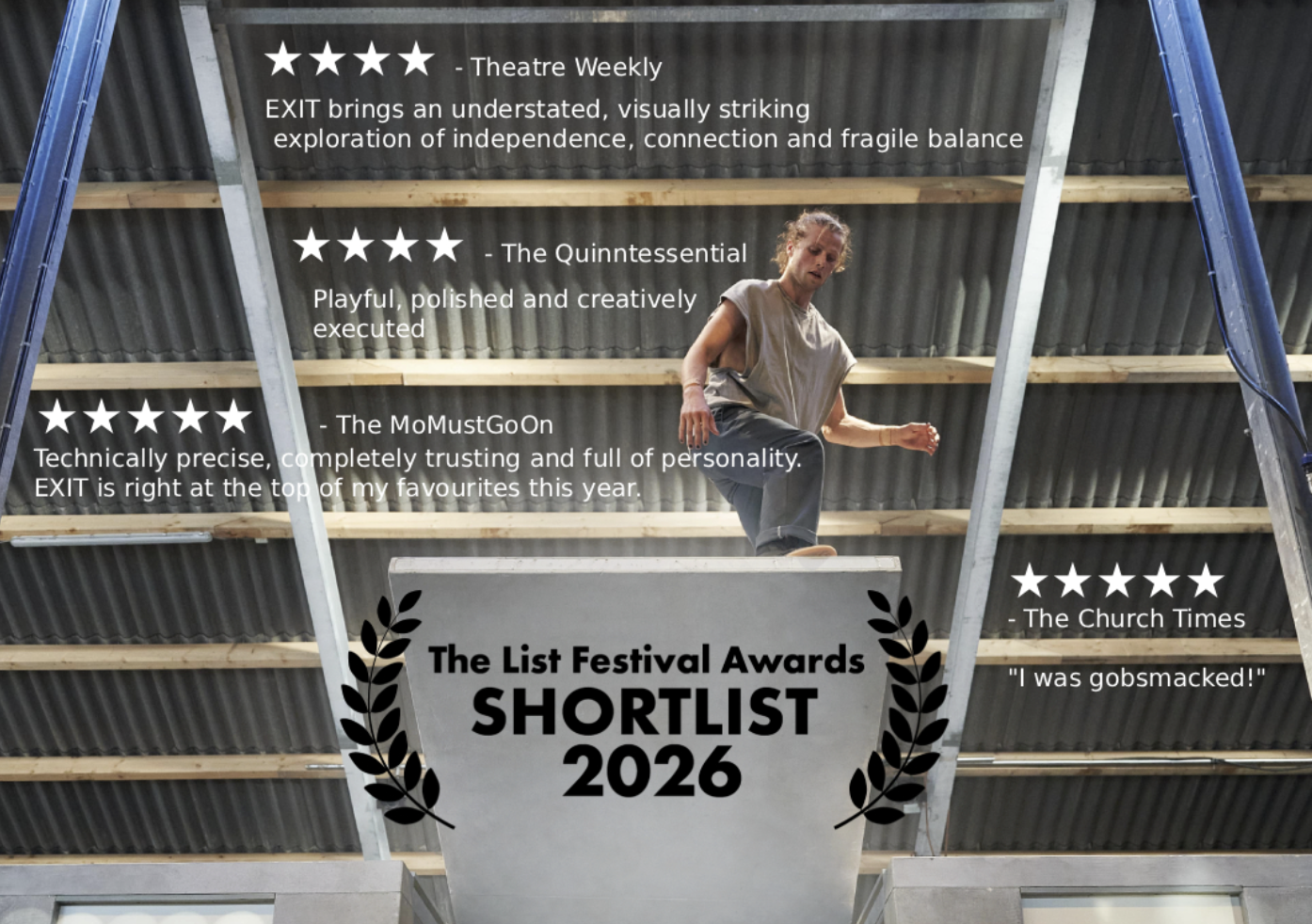
2 weeks. 12 shows. 12 standing ovations. 11 reviews. 2,000 flyers. 252 coffees. And 1 very happy team. This August, EXIT made its Edinburgh Festival Fringe debut.
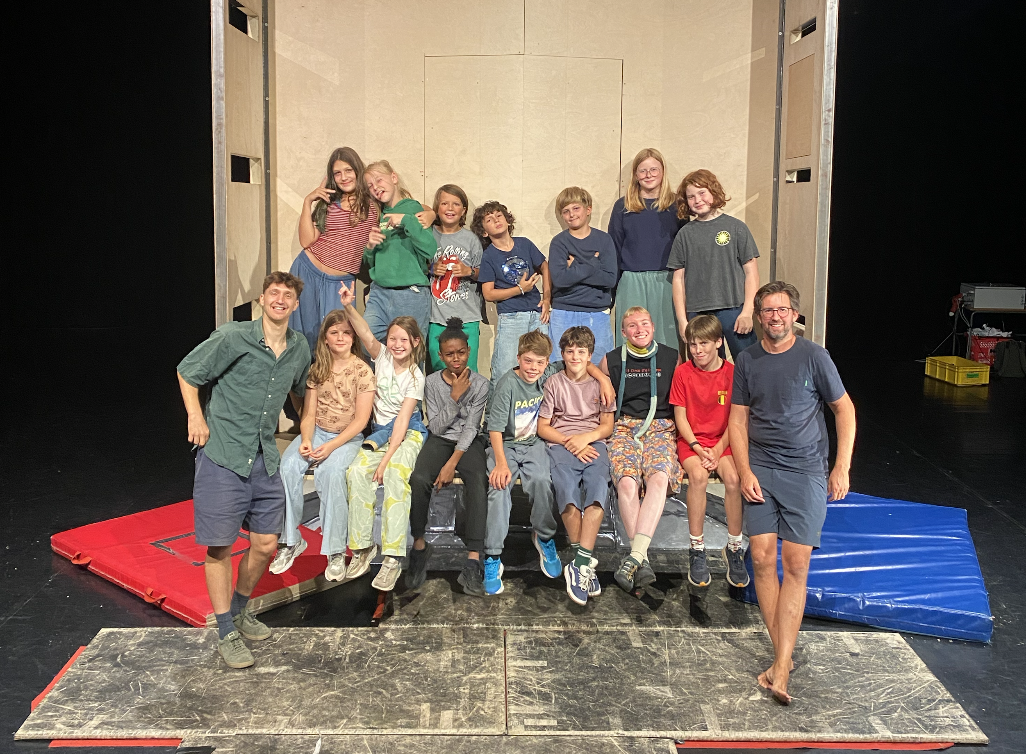
What if children were in charge of the world? This summer, Piet Van Dycke explored that question with thirteen children aged 8 to 12 during a week-long theatre workshop at hetpaleis. Together, they played, balanced and imagined the future: what worries them, what they hope for and what they would change. One thing became clear: this generation has a lot to say. Don’t underestimate them!
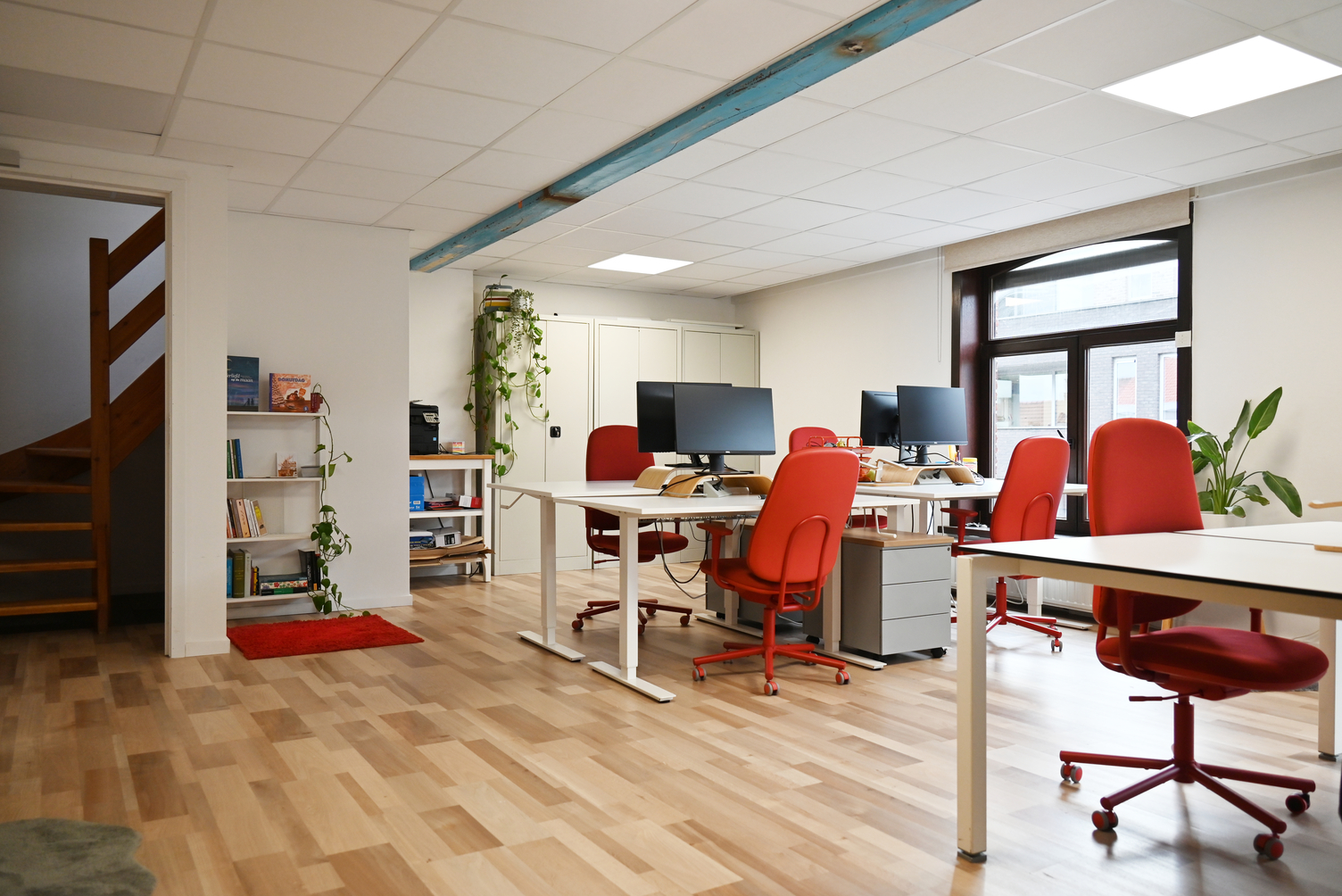
After years of working from the kitchen table, Circumstances finally has an office of its own! Together with KampAdmin, we found a place in Leuven that was just a little too big for our two small teams. The perfect opportunity to start CoLeGa: a small-scale coworking space where we share our workplace with other entrepreneurs.
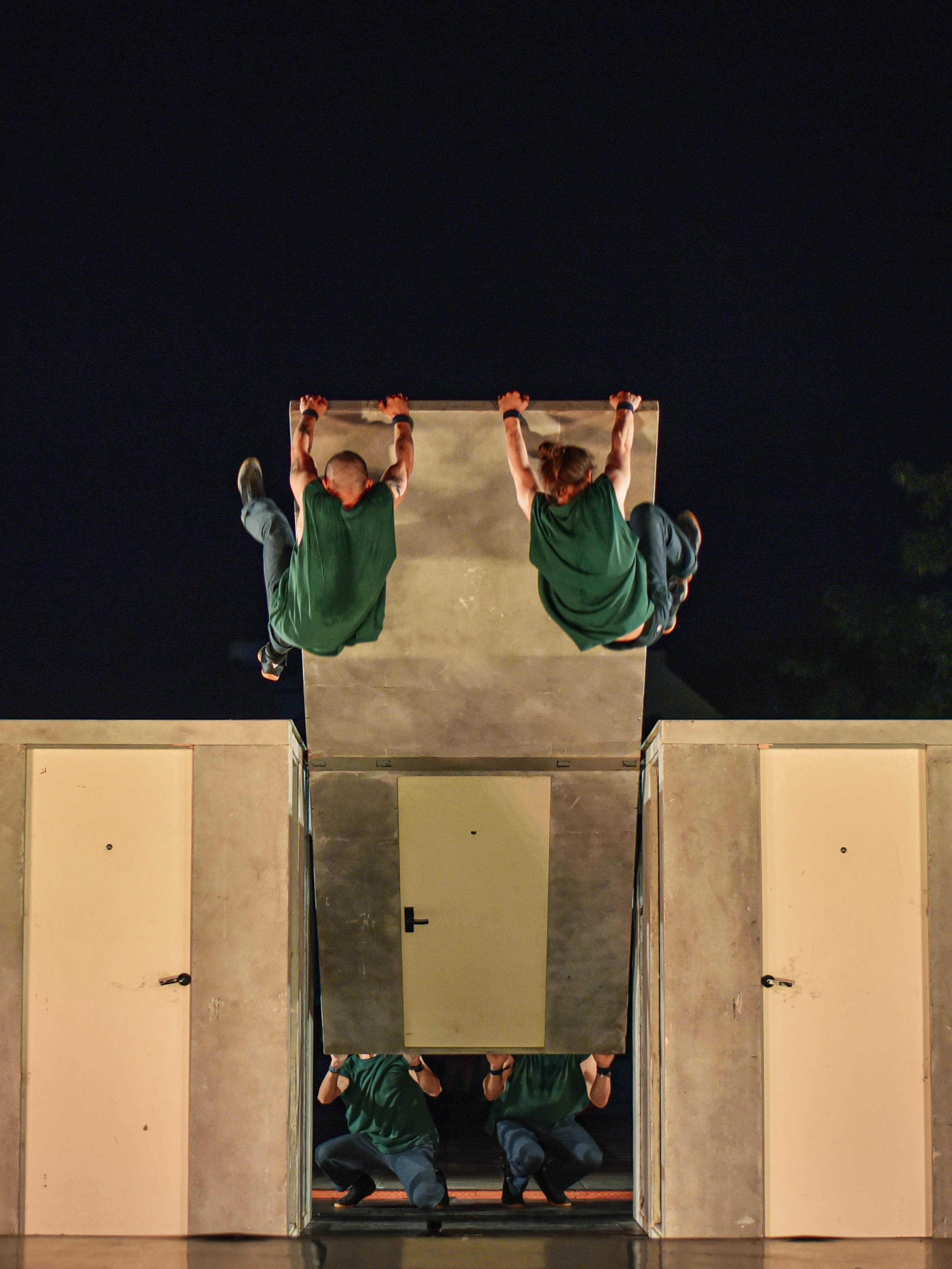
EXIT has been selected for the Edinburgh Festival Fringe and will perform in Edinburgh this August. An intense, physical piece about balance, risk and connection.

In March 2026, our performance BEYOND toured across Switzerland as part of the Steps Dance Festival. With 19 shows, including the Swiss premiere, we performed in ten diverse locations – from small mountain villages to urban settings. We reached a wide audience and were featured in newspapers and on the news. An intense and connecting adventure full of encounters.
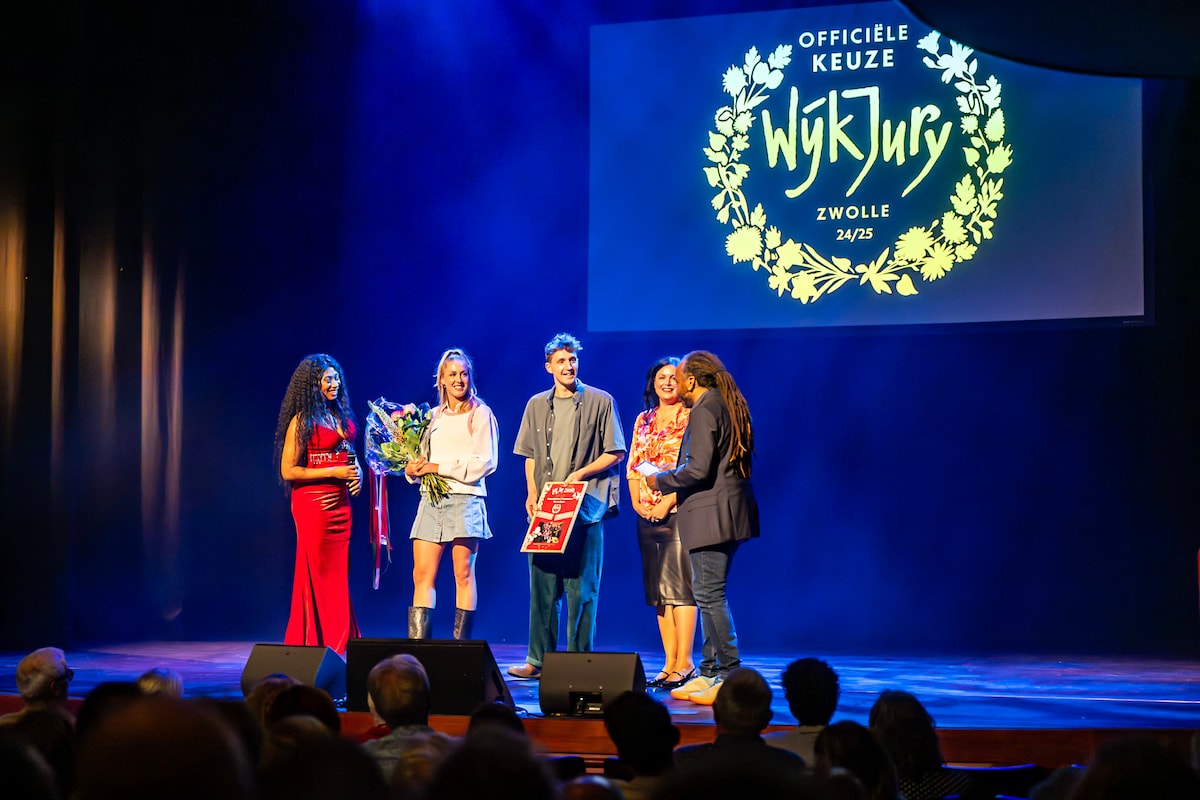
DeWijkJury at Zwolse Theaters – a diverse group of residents from Zwolle – attended and carefully evaluated a range of performances. In the end, GLORIOUS BODIES was awarded the title of the winner.

BEYOND celebrated a truly successful first summer tour. Rain, wind, heatwaves, pigeons, wasps, barking dogs, and even power outages couldn’t stop us – we truly lived up to our name Circumstances.

For the 23rd edition of DansClick, Piet Van Dycke was interviewed by Hasan Gök. The portrait video was shot by Conni Trommlitz and was shown on big screen after the performance during the DansClick tour.

Circus dance, music theatre architecture, and global mime. Piet, Timo, and Elias. These are the names of the three new, completely original creators who are enthusiastically starting a three-year PLAN trajectory this spring.

ON/OFF premiered at Festival Boulevard and was performed at Festival Spoffin and Festival Circolo.
-152-min.jpg)
BEYOND experienced a successful outdoor premiere at the Oerol Festival on Terschelling. We kicked off with the special Eilander opening, followed by no less than 14 sold-out performances during a sun-drenched edition of the festival. It was an intense and unforgettable experience.

Rehearsals for our new production BEYOND are in full swing! This new creation will premiere at OEROL Festival in June, followed by a summer tour across various festivals.

In December, the doors of EXIT traveled over 10,000 km and arrived in Hong Kong with our artists for an unforgettable experience: three weeks, twelve performances, special encounters and a serious jetlag.

We are starting a new collaboration with the international booking agency Aurora Nova, which will support us in the global distribution of EXIT starting in 2026.

SInce 2024, Circumstances has been part of deRUIMTE: a research and creation space at the Scheutsite in Kessel-Lo.

'I think this performance can be an encouragement for older people who might feel like their life is over.'
Rolls, somersaults, lifts, steps, handstands, up and down... GLORIOUS BODIES performed for the Wetteren audience. Hear what impression it left on the spectators in this Confessional video by De Zendelingen.

EXIT has been selected for the TheaterFestival 2023. For the jury, EXIT was the most thrilling circus performance seen in Flanders last season. It's not hard to understand why it also became a true hit among the general public: as the pace and music intensify, you find yourself on the edge of your seat. Wonder reigns, but it is never without purpose. This work genuinely piques our curiosity about what Van Dycke, as an 'up and coming' circus maker, has in store.

On a sunny afternoon, acrobat-teacher Aurelia Brailowsky, dancer-acrobat Det Rijven, choreographer Janni van Goor, and juggler Sander De Cuyper gather in the courtyard of Limerick to discuss a sensitive topic: aging.
Read the full article by Mahlu Mertens in Circus Magazine #75 (June 2023).

'EXIT' premiered during the Krokusfestival in Hasselt. This immediately generated some rave reviews in Focus Knack, Theaterkrant and Etcetera.

At the Krokusfestival in Hasselt, a children's jury voted for their favorite theater performance. EXIT is the winner of this edition.

The Oerol festival has not lost its appeal after two canceled editions. Also this year, the Dutch Wadden Island shows itself from its best side, with location theater in dunes, woods and barns (and sheep next to the stage). We premiered EXIT on the 10th of June at this beautiful festival with the location version.

The year is off to a goodstart. At the beginning of January we were in residency at Cirklabo, in theiconic Predikherenkerk.

“Danshuis” is a series about dance in which every episode a dance house is presented. During the various lockdowns, these kind of dance houses were the only places where dancers and makers could still work together. Hadassah De Boer meets the makers who continue to create new work despite the lockdowns. In episode 4, Club Soda takes centre stage.

Piet Van Dycke has won the BNG Bank Dance Prize 2021 and will be featured in the Netherlands next autumn during the DansClick23 tour. The prize for outstanding choreography talent was awarded on the 25th of June in Parkstad Limburg Theaters in Heerlen during the schrit_tmacher festival.
